Research
Understanding Microbial Ecology Across Diverse Ecosystems
Microbial communities are fundamental to ecosystem functioning, driving processes such as nutrient cycling, organic matter decomposition, and ecosystem resilience. Advances in metagenomics and large-scale environmental DNA sequencing have revolutionized our ability to study these communities, enabling unprecedented insights into their diversity, function, and biogeography.
Our work leverages these tools to investigate symbiotic interactions, microbial community structure, and the ecological significance of rare taxa across diverse ecosystems, from mangroves to coral reefs.
Related work
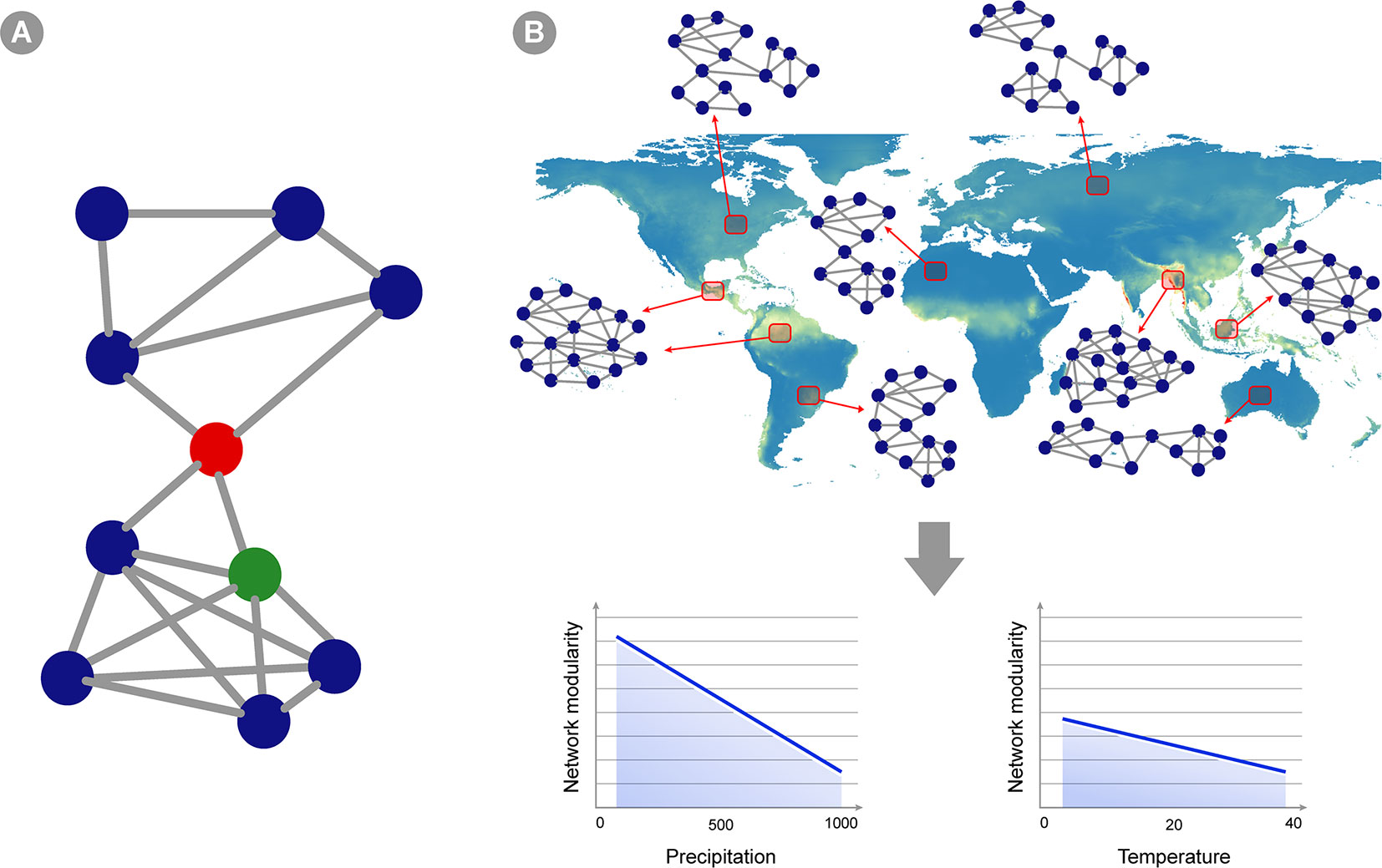
Adaptive Capacity of Ecological Systems
Complex adaptive systems (CASs) are highly sensitive to both the magnitude and rate of environmental change. Rapid environmental shifts can induce destabilizing rate-induced transitions (RITs), pushing systems beyond critical thresholds.
In this project, we investigate how rates of change interact with system dynamics in ecological and socioecological systems, including networks and predator–prey models. This work highlights the role of connectivity and adaptability in system resilience and provides tools to predict vulnerabilities in the Anthropocene.
Related work
Coral Reefs in the Era of Global Warming
Coral reefs depend on symbioses between reef-building corals and photosynthesizing dinoflagellates, which supply most of the corals’ energetic demands. Rising global temperatures disrupt this relationship, leading to coral bleaching and widespread reef degradation.
This project investigates how eco-evolutionary dynamics interact with environmental change to shape coral reef resilience and vulnerability. By integrating theory and ecological modeling, we aim to identify early warning signals and predict critical transitions under climate change scenarios.
© 2025 Amanda B. Campos · Built with R Markdown